Charleston Water System (CWS) and Mount Pleasant Waterworks have documented lead service lines remaining in pre-1986 historic homes across downtown Charleston, North Charleston, and parts of Mount Pleasant. The EPA's Lead and Copper Rule Revisions (LCRR), effective October 2024, require utilities to publish service-line material inventories and replace all lead lines by 2034. A point-of-use reverse osmosis filter or an NSF/ANSI 53 certified faucet filter removes 99% of lead at the tap.
Why Charleston Has a Lead Service-Line Legacy
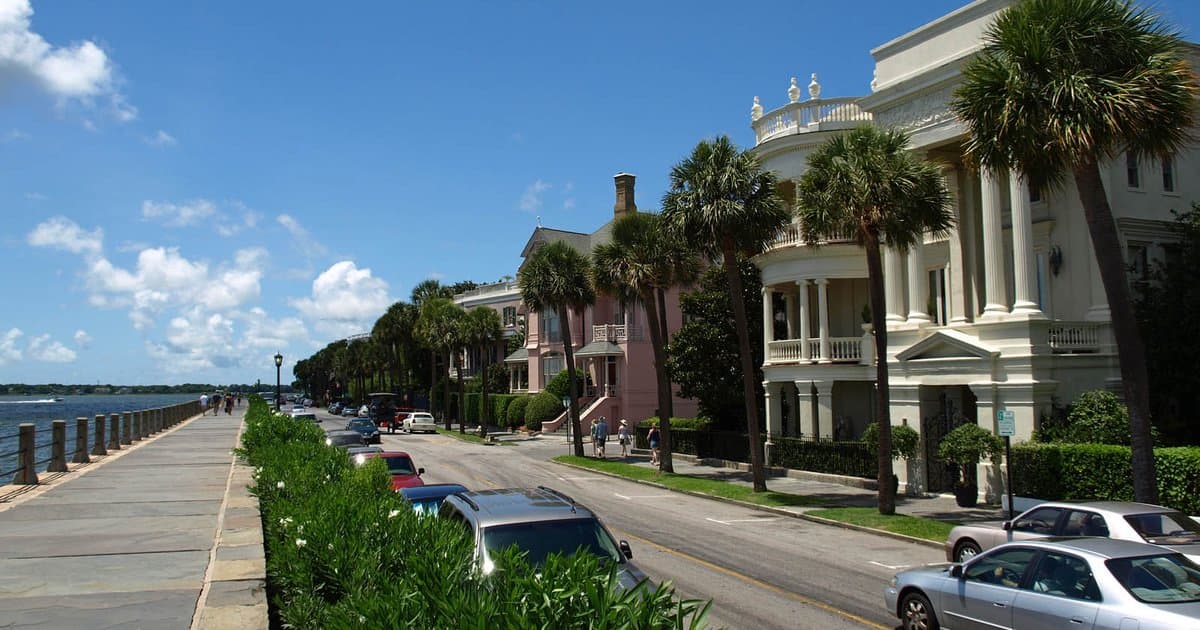
Through the early 20th century, lead was the standard pipe material for the small "service line" connecting a city water main to an individual home, durable, malleable, and corrosion-resistant. The 1986 federal Safe Drinking Water Act Amendments banned lead service lines for new installation, but pre-1986 lines were grandfathered. Charleston's housing stock includes a substantial number of homes built between 1880 and 1940, and the Charleston Water System and Mount Pleasant Waterworks inventories document lead lines remaining in service primarily in:
- Downtown Charleston (peninsula homes built before 1940)
- Wagener Terrace, North Central, and Hampton Park neighborhoods
- North Charleston (older adjacent to industrial sites housing)
- Old Mount Pleasant village
Important nuance: lead in tap water rarely comes from the city's water mains (which are cast iron or ductile iron). It comes from the service line on the homeowner's side of the meter, and from interior plumbing, copper pipes joined with lead-tin solder before 1986, or brass fixtures with up to 8% lead content allowed before 2014.
How to Find Out if Your Home Is on a Lead Service Line
- Check the CWS or MPW inventory map. Under the LCRR, every US water utility published a service-line material inventory by October 2024. CWS's inventory is searchable by address on their website.
- Visually inspect the service line where it enters your basement or crawlspace. Lead pipes are dull gray, scratch easily to a shiny silver, and are not magnetic. Galvanized steel is similar in color but magnetic; copper is reddish-brown.
- Request a free home water test. Both CWS and Mount Pleasant Waterworks offer free lead-in-water test kits to residents in known lead-line neighborhoods. Results take 4–6 weeks.
Health Implications
Lead is a neurotoxin with no known safe level of exposure (US EPA, CDC). Children under 6, pregnant women, and developing fetuses are most vulnerable. The American Academy of Pediatrics guidance is clear: any measurable lead exposure should be eliminated where possible.
For Charleston residents on confirmed lead service lines, the highest-priority intervention is point-of-use filtration at the kitchen tap. Bathing and laundry water use is lower risk because lead does not absorb significantly through skin.
Filter Comparison, What Actually Removes Lead
| Filter Type | Removes Lead? | Certification | Where |
|---|---|---|---|
| Pour-through pitcher (basic) | Some, varies by model | Some carry NSF/ANSI 53 lead | Counter |
| Faucet-mounted filter | Yes if certified | Look for NSF/ANSI 53 lead | Kitchen faucet |
| Under-sink carbon block | Yes if certified | NSF/ANSI 53 lead | Under sink |
| Reverse osmosis (RO) | Yes, 95–99% | NSF/ANSI 58 + 53 | Under sink |
| Whole-house carbon | Limited | Generally not lead-rated | Main entry |
Two filters actually solve the problem at the tap: an NSF/ANSI 53 certified faucet or under-sink carbon-block filter (good), and a reverse osmosis system (best). Whole-house carbon filters are not the right tool for lead, they're built for chlorine and taste/odor reduction, and most are not certified for lead removal.
What NSF/ANSI 53 Actually Means
NSF International is the independent body that tests and certifies water filters against published standards. NSF/ANSI Standard 53 covers "health effects" contaminants including lead, mercury, asbestos, and several others. A filter "certified to NSF/ANSI 53 for lead reduction" has been independently tested to remove lead from challenge water at concentrations above the EPA action level down to below 10 ppb, with at least 200% of the manufacturer's rated capacity.
If a filter package says "filters lead" but does not carry the NSF/ANSI 53 mark, the manufacturer is making an unverified claim. Look for the actual certification logo and check the NSF database (nsf.org) for the model number before buying.
Why We Recommend Alkaline RO for Charleston Historic Homes
The Aquafeel Solutions alkaline RO system is our standard recommendation for Charleston homes on confirmed lead service lines:
- NSF/ANSI 58 (RO) and NSF/ANSI 53 (lead, VOCs, fluoride) certified
- Remineralization stage adds calcium and magnesium back into treated water, RO water without remineralization tastes flat and is mildly corrosive to copper plumbing downstream
- 25-year manufacturer warranty registered with our authorized-dealer install
- Standard install completes in 3–4 hours with a dedicated drinking-water faucet at the kitchen sink
For Charleston homes where a full alkaline RO system is over-spec or the budget is tighter, an NSF/ANSI 53 certified under-sink carbon-block filter is a strong alternative at half the cost.
Frequently Asked Questions
Does boiling water remove lead?
No, and boiling actually concentrates lead by reducing water volume through evaporation. Boil-water advisories are designed for biological contamination, not heavy metals. Use a certified filter for lead.
Will a Brita filter remove lead in Charleston?
Some Brita models do (Brita Elite / Longlast+ filter cartridges are certified to NSF/ANSI 53 for lead). The standard "Brita Standard" cartridge does not filter lead. Check the box for the NSF/ANSI 53 lead certification before relying on a pitcher filter.
How often should lead-removal filter cartridges be replaced?
Manufacturer guidance varies, but typical NSF/ANSI 53 cartridge life is 6 months or 100–200 gallons. RO prefilters last 6–12 months; the RO membrane itself lasts 2–4 years. Replace on schedule, a saturated lead filter can release accumulated lead back into water.
Is it safe to bathe in Charleston tap water if my home has a lead service line?
Yes, with caveats. Lead does not significantly absorb through intact adult skin during normal bathing. Children should not drink bath water; pregnant women should follow standard precautions. The primary exposure pathway is ingestion (drinking, cooking, baby formula, brushing teeth), that's where filtration matters most.
Does Charleston Water System replace the homeowner-side service line?
Under the LCRR, CWS replaces the utility-owned portion of the service line at no cost. The homeowner-owned portion (typically curb stop into the house) is the homeowner's responsibility, though some assistance programs are available for low-income households. Charleston Water System's website has current details on the program and any available subsidies.
Get a Free Charleston Lead Test
If you're in downtown Charleston, North Charleston, Mount Pleasant, or anywhere in Charleston / Berkeley / Dorchester County and you suspect a lead line, or you just want a baseline reading on what's coming out of your tap, we provide free in-home water testing across our SC service area. Schedule a test or call (984) 212-3558. Browse our alkaline RO drinking water systems or our South Carolina water treatment page for full system specs.